

Admissions today are no longer about simply filling out forms, submitting marksheets, and hoping for the best. Schools, exceptionally competitive institutions and top-ranking boarding schools, now take a more holistic approach to evaluate students. In this ecosystem, student counseling has evolved into a pivotal role, helping parents and learners find the right direction while enabling institutions to understand applicants beyond their numbers and grades.
From shaping academic goals to uncovering a child’s personal strengths, student counseling plays a critical role in bridging the gap between who a student is and where they aspire to be. Whether offered through school counseling programs, independent counselors, or modern online counseling for students, its influence on admissions decisions is deeper and more essential than ever before.
In this blog, we’ll unveil how counseling supports students and admissions teams alike, why it has become indispensable in today’s academic landscape, and what parents should look for when evaluating counseling support in schools and Indian boarding schools.
Table of Contents
- What Impacts School Admissions More Than Academic Scores?
- How Admission Counselling Shapes Admission Narratives?
- 1. Discovering Personal Strengths and Academic Readiness
- 2. Ensuring Emotional Preparedness, Especially for Boarding Schools
- 3. Helping Students Present Their Best Selves in Applications
- 4. Supporting Decision-Making for Specialized Career Paths
- 5. The Rise of Online Counselling for Students in Admissions
- 6. Reducing Application Errors and Improving Form Quality
- 7. Assisting in Portfolio Curation for Talent-Based Admissions
- 8. Strengthening Confidence During School Visits and Campus Interactions
- 9. Offering Early Guidance on Entrance Tests and Evaluations
- 10.Aligning Students With the Right Curriculum and Learning Pathways
- 11.Guiding Families Through School Differentiators and Culture Fit
- Why School Counseling Programs Matter in Modern Education
- Conclusion: Counseling Creates Admissions That Truly Fit Students
- Frequently Asked Questions: –
- How does student counselling help parents and students choose the right school?
- How early should students start counselling before the admission season?
- Are admission counsellors available in all schools or only at specific institutions?
- How can online counselling help students during school admissions?
- Do boarding schools in India offer in-house counselling for prospective students?
What Impacts School Admissions More Than Academic Scores?
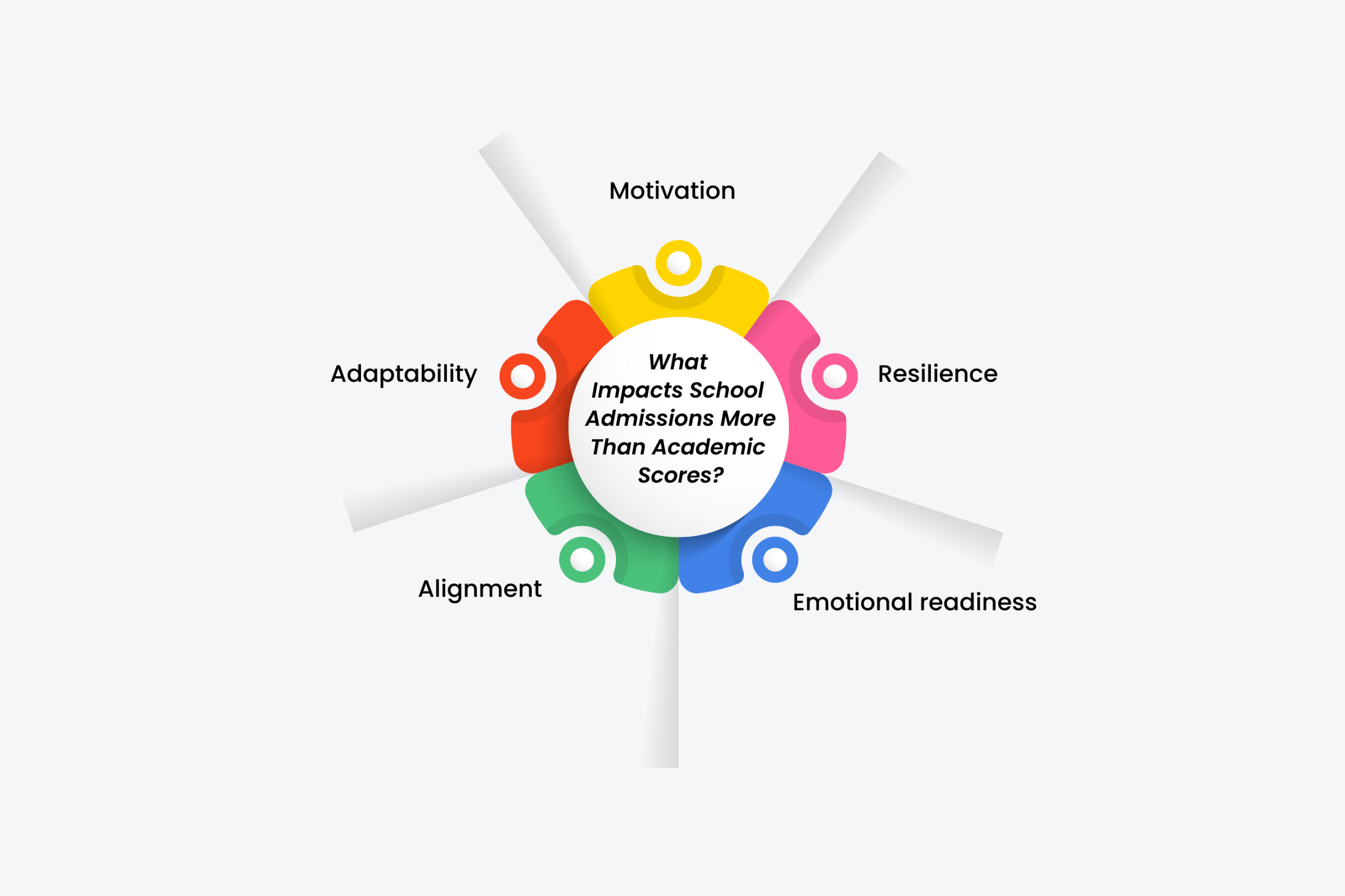
For years, admissions were driven almost entirely by students’ grades and achievements. But many schools now realise that grades alone cannot predict a child’s readiness, emotional maturity, or long-term success. Today, academic performance forms just one part of a much larger picture that schools want to understand.
Today, schools evaluate a child’s:
- Motivation: What motivates the student?
- Resilience: How do they handle challenges, transitions, or unfamiliar environments?
- Emotional readiness: Are they emotionally prepared for independent living and structured routines, especially in a boarding school environment?
- Alignment: Do their goals align with the school’s strengths?
- Adaptability: How well can they adapt to a structured academic life?
These qualities say more than what a grade could ever tell. And this is where student counseling becomes invaluable.
Through conversations, assessments, and guided reflections, counseling gives admissions teams an authentic, well-rounded picture of students’ abilities, personality, aspirations, and readiness. This is not just important for schools to make informed decisions about admissions, but it also helps in preparing the child for their long-term growth.
How Admission Counselling Shapes Admission Narratives?

After we have learned why top schools and most boarding schools in India have shifted towards a dynamic admissions approach, let’s also understand how admission counseling shapes students’ admission narratives that interest schools in their profiles.
1. Discovering Personal Strengths and Academic Readiness
A major part of student counseling involves helping learners understand their own strengths, academic, behavioral, and emotional. Counselors analyze learning patterns, interests, achievements, and struggles.
When students apply to competitive institutions or the best boarding school in India, these insights help admissions teams see whether the student’s profile aligns with the school’s expectations.
For example, a student applying to a STEM-focused campus benefits from counseling that highlights their logical reasoning, curiosity, or problem-solving approach. Similarly, a child headed to a creative arts-oriented institution can showcase a portfolio developed through the counseling sessions.
In this way, counseling becomes a bridge that connects students to the environments where they can thrive.
2. Ensuring Emotional Preparedness, Especially for Boarding Schools
Transitioning to a boarding school in India is a major shift for any child. They must adapt to:
- A highly structured daily routine
- Independent living
- Peer competition
- Academic rigor
- Cultural diversity
- Emotional self-regulation
Student counseling works on emotional readiness, building resilience, self-confidence, and coping strategies. Admissions panels at Indian boarding schools often consider emotional maturity as seriously as academic readiness.
Counselors help determine whether a student is ready for this lifestyle change or needs more time or preparation. This prevents future adjustment issues and improves students’ long-term well-being.
3. Helping Students Present Their Best Selves in Applications
While most parents focus on scores and extracurricular achievements, very few realize how crucial self-expression is in the admissions process.
School essays, interviews, portfolios, and even simple self-assessment forms can become a powerful game-changer when guided by proper counseling. This is because in career counselling for students, counselors train applicants to:
- Reflect deeply on their goals
- Develop honesty and clarity in interviews
- Showcase unique personal attributes
- Communicate strengths in a non-generic way
- Speak confidently about future ambitions
This guidance helps admissions officers see the student’s individuality, not just their report card.
4. Supporting Decision-Making for Specialized Career Paths
As students grow older, especially during high school years, career clarity becomes essential. This is where, again, career counselling for school enables students to align the admissions process with their future aspirations.
For example:
- A student interested in sports science may be guided toward a school with a strong athletics ecosystem.
- A child passionate about robotics may be steered toward a tech-driven curriculum.
- Students with artistic inclinations may be matched with schools known for creativity-based programs.
Counseling ensures students choose institutions that nurture long-term growth rather than simply opting for what’s popular.
5. The Rise of Online Counselling for Students in Admissions
The pandemic accelerated the adoption of online counselling for students, making expert guidance accessible across cities, small towns, and even international locations. Today, virtual counseling plays a major role in school admissions, especially for families exploring options like:
- Niche learning boards (IB, Cambridge, ICSE)
- International boarding schools
- Hybrid or digital schools
- Specialized schools for sports, arts, or leadership training
Virtual sessions allow counselors to:
- Conduct behavioral assessments
- Guide parents on application strategies
- Help students prepare for entrance interactions
- Provide psychological support during transitions
This accessibility ensures that even students from remote regions can confidently apply to the best boarding school in India or other premium academic institutions.
6. Reducing Application Errors and Improving Form Quality
A large number of admissions forms are rejected or delayed due to incomplete information, unclear answers, or avoidable mistakes. Student counseling helps families complete application materials accurately and thoughtfully, minimizing these issues. Cleaner, more meaningful applications influence admission outcomes significantly.
7. Assisting in Portfolio Curation for Talent-Based Admissions
Many schools require portfolios for creative fields like visual arts, dance, design, debate, creative writing, or theatre. Counseling helps curate these portfolios, ensuring they demonstrate skill progression, consistency, and originality, factors that strongly enhance admission prospects.
8. Strengthening Confidence During School Visits and Campus Interactions
Campus tours and open-house interactions have become a part of modern admissions. Counseling helps students conduct themselves confidently, ask smart questions, and engage meaningfully during these visits. These subtle interactions often influence a school’s perception of readiness and interest.
9. Offering Early Guidance on Entrance Tests and Evaluations
Many competitive schools, especially boarding schools and international campuses, conduct aptitude assessments or entrance interviews. Counseling prepares students for these requirements by helping them understand what to expect, how to structure responses, and how to demonstrate clarity of thought. Admissions teams see a noticeable difference in confidence and performance among students who undergo structured counseling.
10.Aligning Students With the Right Curriculum and Learning Pathways
Different schools offer different boards like CBSE boards, ICSE boards, IB boards, and Cambridge boards, each with its own learning philosophy. Student counseling helps families understand which curriculum best matches a child’s learning pace, academic strengths, and long-term goals. This alignment plays a major role in admissions because schools prefer candidates who genuinely fit their learning framework.
11.Guiding Families Through School Differentiators and Culture Fit
Parents often choose schools based on popularity, not suitability. Student counseling breaks down each school’s teaching style, discipline structure, hostel environment, and academic expectations. This ensures students apply to institutions where the culture aligns with their personality, something highly valued by admissions committees.
Why School Counseling Programs Matter in Modern Education
With rising academic pressure, global competition, and increased student anxiety, school counseling programs are no longer optional; they are essential pillars of a school’s ecosystem.
These programs contribute to:
- Emotional well-being
- Academic tracking
- Career planning
- Social development
- Crisis management
- Relationship building
For Indian boarding schools, where students spend years away from home, counseling is vital. It supports children through highs and lows, builds a nurturing environment, and ensures every learner grows holistically. Most importantly, strong counseling programs naturally feed into the admissions process. They help schools understand a student’s readiness, resilience, and personal growth trajectory—insights that grades alone cannot provide.
Conclusion: Counseling Creates Admissions That Truly Fit Students
Admissions today aren’t just about choosing a school; they’re about choosing a future, and student counseling ensures that this future is built on clarity, self-awareness, and well-informed decisions. Whether accessed through in-school services, independent experts, or online counselling for students, counseling gives learners the confidence to pursue the right path.
In fact, when it comes to school, from regular ones to the best boarding school in India, counseling helps build a student community that is balanced, emotionally prepared, and aligned with the school’s ethos.
One such platform is Boarding Schools of India, where experts with a keen understanding of top Indian boarding schools counsel students to become better academic enthusiasts, and to be aware of their goal path. Not only do our experts shape the best versions of students to qualify for even the toughest admission processes in Indian boarding schools, but they also prepare them for what truly aligns with their academic growth. In a world where education defines opportunities, experts at Boarding Schools of India ensure that every admissions decision is shaped with care, understanding, and purpose.Call us now for student counseling!
Explore more Blogs: https://blog.boardingschoolsofindia.com/
Frequently Asked Questions: –
How early should students start counselling before the admission season?
Ideally, students should begin counselling 6-12 months before admissions open. This gives enough time for assessments, academic preparation, portfolio building, behavioural readiness, interview practice, and school shortlisting. Starting early also reduces stress and allows families to make informed decisions rather than rushed choices.
Are admission counsellors available in all schools or only at specific institutions?
Not all schools offer dedicated admission counsellors. They are more commonly found in premium private schools, international schools, and established Indian boarding schools. While many schools have general counselors, specialized admission guidance is usually available only in institutions with structured school counseling programs.
How can online counselling help students during school admissions?
Online counselling provides flexible, accessible support regardless of location. Students can receive guidance on school selection, curriculum choices, entrance exam preparation, interview practice, and emotional readiness. It also helps parents understand application requirements and timelines, making the entire admissions process smoother and more organized.
Do boarding schools in India offer in-house counselling for prospective students?
Yes, most reputable boarding schools in India offer in-house admission counselling to help families understand the school’s routines, expectations, academic pathways, and hostel life. These counselors also assess whether a child is emotionally and socially prepared for residential schooling, ensuring a good long-term fit.