

Education is not the same as it was a few years ago. How students learn, think, and prepare has changed. With internet access, competition, and evolving career paths, students are expected to excel beyond scoring marks.
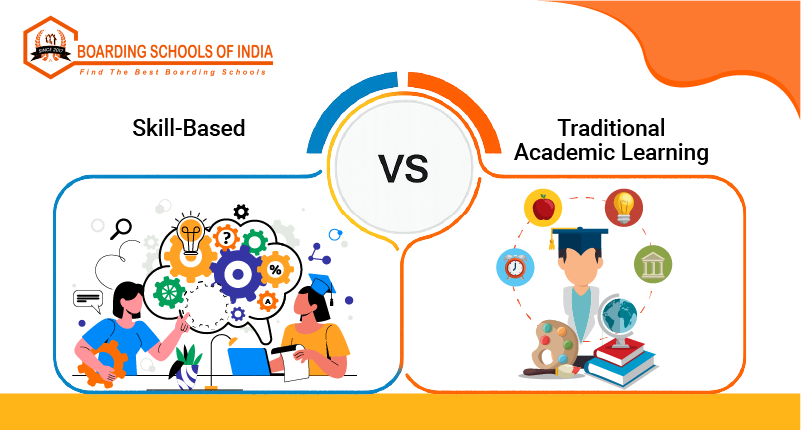
This shift brings two major learning approaches: traditional learning and skill-based learning. While one focuses on theory and academic knowledge, the other focuses on practical abilities and real-world application.
The debate is important as students are preparing for careers. Boarding schools, residential schools in India, are now trying to balance approaches to provide global learning, meeting real-life conditions.
In this blog, we’ll explore both approaches in a simple way, helping you understand what works best and why a balanced approach might be the right choice.
Table of Contents
- The Changing Landscape Of Education
- What Is Traditional Academic Learning?
- Advantages Of Traditional Education
- Limitations Of Traditional Learning Methods
- Why Traditional Education Still Holds Value?
- What Is Skill-Based Learning?
- Examples of Skill-Based Education
- The Role Of Skill-Based Learning In Career Development
- Differences Between Skill-Based And Traditional Learning
- Challenges In Skill-Based Learning vs Traditional Academic Learning
- The Rise Of Hybrid Learning Models
- Which One Works Best?
- Final Thoughts
- Frequently Asked Questions
- What is skill-based learning in education?
- How does skill-based learning improve practical knowledge and employability?
- What role does technology play in modern skill-based education?
- What are the main benefits of skill-based education for students?
- How can schools integrate skill-based learning into traditional curricula?
The Changing Landscape Of Education
Success used to be primarily measured by grades, ranks, and degrees. As a result, students followed a structured study path, performed well academically, and secured stable careers. However, today’s job market is rapidly changing, industries are evolving, and the skills needed for success extend beyond what is taught in textbooks. This shift has brought traditional education and skill-based learning into the spotlight.
Nowadays, parents assess education not only through academic performance but also by considering extracurricular activities, the overall educational approach, confidence, and readiness for future challenges.
What Is Traditional Academic Learning?
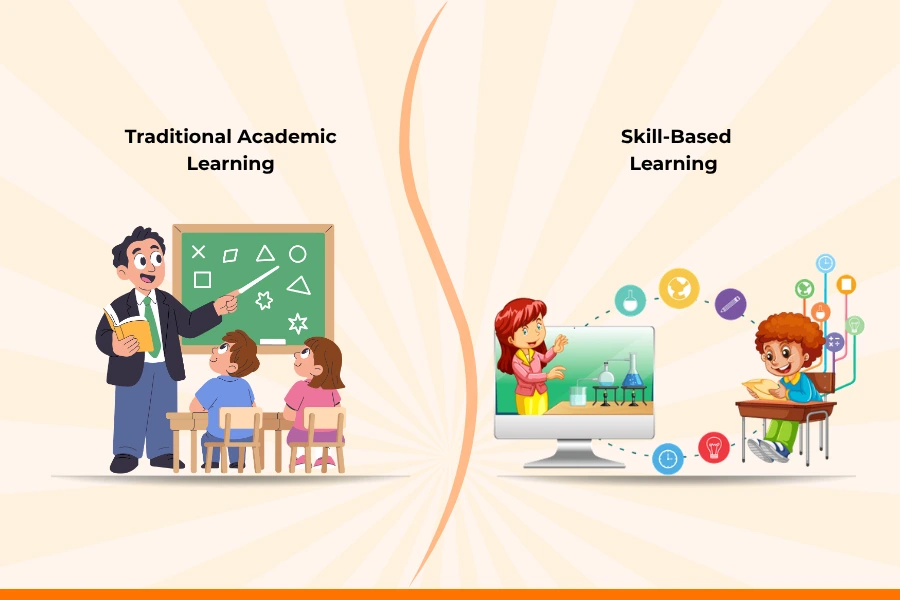
Traditional form of learning, which is still very popular in many Indian schools, includes classroom teaching, textbooks, structured curriculum, and examinations. Teachers guide through the process, and students learn by listening, reading, and preparing for tests. This approach is organized and consistent, making it reliable academic knowledge across subjects.
Advantages Of Traditional Education
- One of the biggest strengths of traditional learning is a strong foundation. Subjects like mathematics, science, and languages require depth, and this system supports it very well.
- It teaches discipline. Fixed schedules, regular exams, and deadlines help students develop focus and responsibility. Degrees and certifications earned through traditional systems are widely recognized and necessary for higher education and professional careers.
Limitations Of Traditional Learning Methods
- Traditional learning tends to focus more on theory than on real-world application.
- Students learn concepts but struggle when it comes to using them in practical situations.
- There is also a tendency to memorize rather than understand the concepts.
- The traditional approach to learning limits creativity and core thinking, essential in today’s world.
Why Traditional Education Still Holds Value?
1. Building Strong Foundations
In today’s skill-focused world, sound academic knowledge remains essential. Without a solid base, skills alone may not matter.
2. Importance of Degrees and Certifications
Certain careers like medicine, law, and engineering depend heavily on traditional education systems.
3. Critical Thinking and Academic Depth
Traditional learning helps develop deep thinking and analytical skills. It allows students to explore in detail to build a strong intellectual base.
What Is Skill-Based Learning?
Skill-based learning focuses on how to apply knowledge in real-life situations. Instead of just learning concepts, students actively engage in activities, projects, and problem-solving tasks.
- It shifts the focus from “what you know” to “how you use acquired knowledge.”
Examples of Skill-Based Education
- Students use coding to build real-world applications,
- Improve communication through group discussions
- Develop leadership for team projects.
Today, many Indian boarding schools are integrating such approaches into their education to build skills, ensuring better preparedness for real-world challenges.
Benefits Of Skill-Oriented Learning
- This approach builds confidence as students are actively involved in a learning journey.
- They are not just passive learners; they are active participants.
- It also encourages individuals’ creativity, adaptability, and problem-solving skills.
- In a world driven by global learning and constant change, these qualities matter most especially in today’s competitive environment.
The Role Of Skill-Based Learning In Career Development
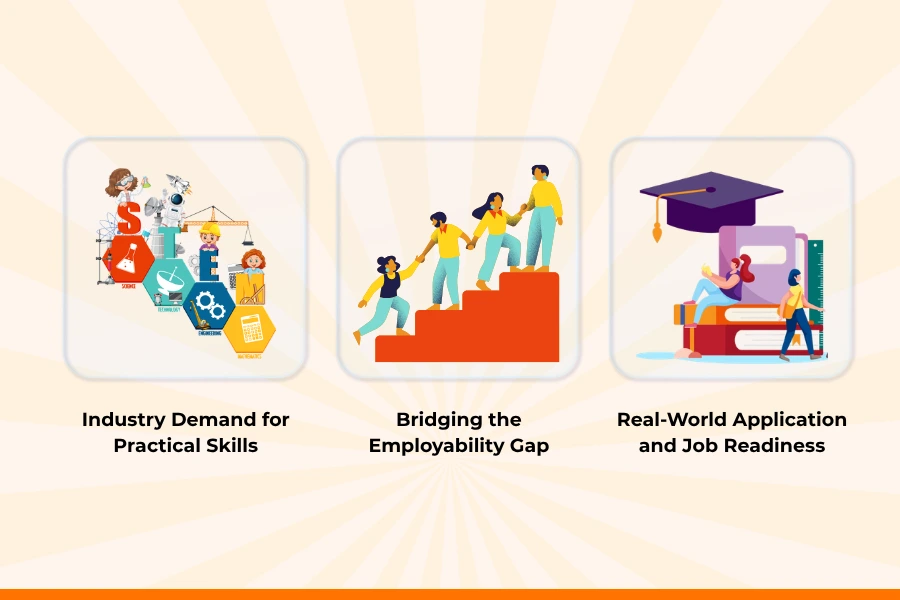
1. Industry Demand for Practical Skills
Today’s employers are not just looking for degrees; they need individuals who think, adapt, and contribute from day one. Skills like communication, teamwork, and problem-solving are highly valued.
2. Bridging the Employability Gap
One of the biggest challenges today is the gap between education and employment. Many graduates with degrees lack the confidence or ability to perform in real-world situations.
Skill-based learning helps bridge this gap by giving students hands-on experience and practical exposure required by industries.
3. Real-World Application and Job Readiness
Students who are exposed to real-life tasks during their learning process are naturally more prepared. They understand how to apply concepts, work in teams, and handle challenges, making them job-ready.
Differences Between Skill-Based And Traditional Learning
| Aspect | Traditional Learning | Skill-Based Learning |
| Approach | Teacher-led and structured | Student-led and interactive |
| Focus | Theoretical knowledge | Practical application |
| Learning Style | Lectures and textbooks set syllabi | Projects and hands-on activities |
| Assessment | Exams and scores | Continuous evaluation and through projects |
| Flexibility | Fixed curriculum | Adaptable and interest-based |
| Outcome | Academic knowledge | Real-world applications |
| Student Role | Passive learner | Active participant |
Both approaches have their own strengths, which is why many schools are now trying to combine them.
Challenges In Skill-Based Learning vs Traditional Academic Learning
While both learning approaches offer valuable benefits, they also come with certain challenges that parents should be aware of. Understanding these limitations can help you make a more informed and balanced decision for your child’s education.
| Skill-Based Learning Challenges | Traditional Academic Learning Challenges |
Lack of Standardization
|
Outdated Curriculum Issues
|
Limited Recognition in Some Sectors
|
Limited Practical Exposure
|
Quality Variations in Training Programs
|
High Cost and Time Investment
|
The Rise Of Hybrid Learning Models
1. Combining Skills with Academic Knowledge
Today, schools are blending both approaches. They focus on academic learning, also encouraging skill development through activities and projects.
2. Role of Online Learning Platforms
Online platforms have made it easier than ever for students to learn new skills alongside their formal education.
3. Future of Integrated Education Systems
Many residential schools in India and the best boarding schools of India are now adopting this balanced approach to support all-around student development.
If you’re exploring schools that offer the right mix of traditional learning and skill-based learning, we at Boarding Schools of India help you compare and shortlist options based on your child’s needs, location, and budget—making this journey simpler and more reassuring for you.
Which One Works Best?
1. Factors to Consider
The right choice depends on your child’s interests, career goals, and learning style. Some students thrive in structured environments, while others perform better with practical exposure.
2. Situational Advantages of Each Approach
Traditional learning is ideal for academic and research-focused careers. Skill-based learning works better for creative, technical, and real-world roles.
3. Why a Balanced Approach is Ideal?
As a parent, what you truly want is a relevant education for your child in today’s times. Not just good marks, but self-confidence, creativity, and the ability to handle real-life situations.
This is why a balanced approach combining both methods is often the best choice, especially when considering an Indian boarding school environment that focuses on holistic growth.
Final Thoughts
Today’s education is not about choosing a skill-based approach over a traditional one. It’s about finding the best suit that prepares your child for academic success in the real world.
Choosing the right school is not an easy decision. It’s not just about education, it’s about your child’s future, safety, and overall development to meet the evolving Professional requirements.
At Boarding Schools of India, we’re here to guide you through this journey. From helping you explore and compare, finding the right fit among the best boarding schools of India. We simplify the process so you can make confident, informed decisions in your child’s best interest.
Frequently Asked Questions
How does skill-based learning improve practical knowledge and employability?
It gives students hands-on experience, helping them build confidence, solve real problems, and develop skills that employers value, making them better prepared for jobs and workplace challenges.
What role does technology play in modern skill-based education?
Technology makes learning more interactive through online courses, simulations, and tools, allowing students to learn new skills anytime, practice more, and stay updated with current industry trends.
What are the main benefits of skill-based education for students?
It improves confidence, creativity, and problem-solving abilities, while also helping students become more independent, adaptable, and ready to handle real-world situations beyond the classroom.
How can schools integrate skill-based learning into traditional curricula?
Schools can include projects, internships, group activities, and practical assignments along with regular subjects, so students learn concepts deeply and also understand how to apply them in real life.